This is a continuation of an item-by-item rebuttal of the Agenda for America (You can find Part 1 here)
7. Trade Policies that Benefit American Workers
Sanders continues his assault on the free market by attacking various free (or at least free-ish) trade policies such as NAFTA, which he dubs "disastrous". He is more explicit in his condemnation of free trade policies here. For Sanders, the issue is simple. American manufacturing jobs are "moving overseas" and this must be stopped at all costs.
Again, Sanders falls prey to yet another economic fallacy: economic nationalism (or, at the very least, an anti-foreign bias). Sanders cites the 4.9 million manufacturing jobs lost with the growth of more manufacturing overseas, but he fails to note all the other jobs that were created in the same timeframe. Sanders is not alone in his constant reiteration that America, for some reason, NEEDS manufacturing jobs.
The reason that there are greater numbers of factories located outside of America is simple: they're cheaper. The cheaper it is to produce a good, the cheaper that good can be sold for. Sanders is in effect advocating for higher prices nationwide (which isn't ideal for the American working class he claims to represent). The whole point serves as a convenient condemnation of two of Sanders' greatest foes: corporations and foreigners.
8. Making College Affordable for All
Though this is nominally about higher education, Sanders elaborates that he thinks America needs a complete educational overhaul. He believes that not only college, but also "quality child care" should be made "affordable" for all. Presumably, he means to lower the direct cost to the consumer through heavy subsidies.
Forbes has an excellent write-up that details how subsidies actually raise the price of college. Sanders' proposal would be at best counterproductive, and at worse, a major contribution to the mountains of debt that many students already find themselves under. Even pushing that aside, to subsidize education on this scale would necessitate a tremendous amount of increased government spending, complicated tax incentives, and likely increased taxation.
But hey, it sounds nice, doesn't it? And isn't that what really counts?
9. Taking on Wall Street
By this, Sanders means to "break up" large financial institutions, as they are "too powerful" to be reformed. He blames them solely for the Great Recession, and implies that their power and lack of regulation is a danger to us all.
The second point is laughable. The financial sector of the economy is among the most highly regulated in the nation, subject to the jurisdiction of a plethora of financial regulators (at both the state and the federal level). I applaud Sanders for attempting to address cronyism, but he misses the mark here.
Moreover, Sanders fears these financial institutions for their size alone. Even if he didn't blame them for the financial crisis, he'd still want to break them up and regulate them purely for being too big for his liking. Never mind the fact that these large financial institutions behave in such a risky manner because they've been trained to. By that I mean, there is the expectation that the government will always step in to bail them out if things go too far. This creates a moral hazard problem, where the risk is decreased because it is being borne by an outside party (the government), so banks feel free to risk as much as they want.
As always, Sanders only sees one side of the issue, and ignores the federal government's role in the problems he crusades so strongly against.
10. Health Care as a Right for All
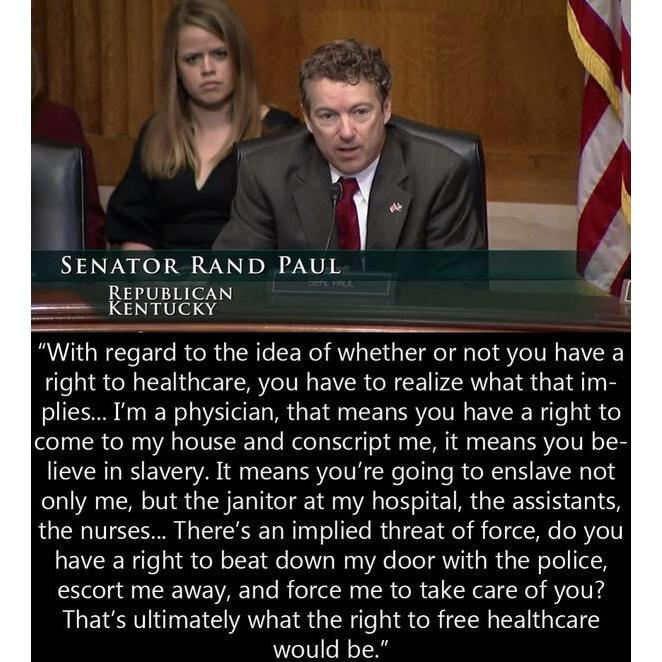
Rand Paul said this better than I ever will. Sanders believes that there ought to be rights that obligate people to receive certain things at the behest of the federal government, rather than the understanding that rights exist to restrict what the government can do against the individual.
11. Protecting the Most Vulnerable Americans
America is in debt. Trillions and trillions of dollars worth of debt. Unfunded mandates are programs the federal government is obligated to pay for (such as Social Security or Medicaid), but lacks the money in the coffers to address it. These unfunded mandates measure in the hundreds of trillions of dollars, far in excess of the already massive federal debt.
Sanders doesn't care about the looming debt crisis. Instead, he calls for massive expansions to these programs. The cost is irrelevant to him. He believes that the key to alleviating poverty is through the hands of the federal government.
In 1964, Lyndon Johnson began the "War on Poverty", a series of legislative actions and social programs designed the end poverty in the United States. Fifty-one years later, poverty is still here. The only difference is the trillions of dollars spent trying to get rid of it. Poverty is not something that the federal government can ultimately vanquish.
An end to poverty comes from the millions of Americans working every day to create businesses, to expand wealth, and to invent new labor-saving technology. The market has freed more people from poverty than the government ever will.
12. Real Tax Reform
This is the crux of the matter. Sanders has so far outlined a massive spending program the likes have which have never been seen before in America. Trillions of dollars spent attempting to alleviate every perceived social ill that he can imagine, without a word of how to pay for it. Until now.
Sanders' idea of real tax reform toes his own party line: tax "the rich". As much as possible. Increase taxes on corporations, increase taxes on the wealthy, increase taxes all across the board.
Taxation has a negative effect on the creation of wealth. A progressive tax rate effectively punishes success. The more value you create, the more people you help, the better you do for your fellow man in an economy (as measured by your own wealth), the more the government takes away from you. Under this plan, enterprising young workers would pour out of the country. Businesses would flee to less restrictive regimes. Unemployment would rise. Growth would fall.
For Sanders, this would be justification of his whole plan. The corporations would be at fault, the foreign governments that offer less financially oppressive regimes would be at fault. Certainly not the federal government! All Sanders wants to do is help the people out.
Sanders may have the best of intentions with his ambitious "Agenda for America", but he would ultimately hurt workers, the economy, and the country more than he would help.
7. Trade Policies that Benefit American Workers
Sanders continues his assault on the free market by attacking various free (or at least free-ish) trade policies such as NAFTA, which he dubs "disastrous". He is more explicit in his condemnation of free trade policies here. For Sanders, the issue is simple. American manufacturing jobs are "moving overseas" and this must be stopped at all costs.
Again, Sanders falls prey to yet another economic fallacy: economic nationalism (or, at the very least, an anti-foreign bias). Sanders cites the 4.9 million manufacturing jobs lost with the growth of more manufacturing overseas, but he fails to note all the other jobs that were created in the same timeframe. Sanders is not alone in his constant reiteration that America, for some reason, NEEDS manufacturing jobs.
The reason that there are greater numbers of factories located outside of America is simple: they're cheaper. The cheaper it is to produce a good, the cheaper that good can be sold for. Sanders is in effect advocating for higher prices nationwide (which isn't ideal for the American working class he claims to represent). The whole point serves as a convenient condemnation of two of Sanders' greatest foes: corporations and foreigners.
8. Making College Affordable for All
Though this is nominally about higher education, Sanders elaborates that he thinks America needs a complete educational overhaul. He believes that not only college, but also "quality child care" should be made "affordable" for all. Presumably, he means to lower the direct cost to the consumer through heavy subsidies.
Forbes has an excellent write-up that details how subsidies actually raise the price of college. Sanders' proposal would be at best counterproductive, and at worse, a major contribution to the mountains of debt that many students already find themselves under. Even pushing that aside, to subsidize education on this scale would necessitate a tremendous amount of increased government spending, complicated tax incentives, and likely increased taxation.
But hey, it sounds nice, doesn't it? And isn't that what really counts?
9. Taking on Wall Street
By this, Sanders means to "break up" large financial institutions, as they are "too powerful" to be reformed. He blames them solely for the Great Recession, and implies that their power and lack of regulation is a danger to us all.
The second point is laughable. The financial sector of the economy is among the most highly regulated in the nation, subject to the jurisdiction of a plethora of financial regulators (at both the state and the federal level). I applaud Sanders for attempting to address cronyism, but he misses the mark here.
Moreover, Sanders fears these financial institutions for their size alone. Even if he didn't blame them for the financial crisis, he'd still want to break them up and regulate them purely for being too big for his liking. Never mind the fact that these large financial institutions behave in such a risky manner because they've been trained to. By that I mean, there is the expectation that the government will always step in to bail them out if things go too far. This creates a moral hazard problem, where the risk is decreased because it is being borne by an outside party (the government), so banks feel free to risk as much as they want.
As always, Sanders only sees one side of the issue, and ignores the federal government's role in the problems he crusades so strongly against.
10. Health Care as a Right for All
Rand Paul said this better than I ever will. Sanders believes that there ought to be rights that obligate people to receive certain things at the behest of the federal government, rather than the understanding that rights exist to restrict what the government can do against the individual.
11. Protecting the Most Vulnerable Americans
America is in debt. Trillions and trillions of dollars worth of debt. Unfunded mandates are programs the federal government is obligated to pay for (such as Social Security or Medicaid), but lacks the money in the coffers to address it. These unfunded mandates measure in the hundreds of trillions of dollars, far in excess of the already massive federal debt.
Sanders doesn't care about the looming debt crisis. Instead, he calls for massive expansions to these programs. The cost is irrelevant to him. He believes that the key to alleviating poverty is through the hands of the federal government.
In 1964, Lyndon Johnson began the "War on Poverty", a series of legislative actions and social programs designed the end poverty in the United States. Fifty-one years later, poverty is still here. The only difference is the trillions of dollars spent trying to get rid of it. Poverty is not something that the federal government can ultimately vanquish.
An end to poverty comes from the millions of Americans working every day to create businesses, to expand wealth, and to invent new labor-saving technology. The market has freed more people from poverty than the government ever will.
12. Real Tax Reform
This is the crux of the matter. Sanders has so far outlined a massive spending program the likes have which have never been seen before in America. Trillions of dollars spent attempting to alleviate every perceived social ill that he can imagine, without a word of how to pay for it. Until now.
Sanders' idea of real tax reform toes his own party line: tax "the rich". As much as possible. Increase taxes on corporations, increase taxes on the wealthy, increase taxes all across the board.
Taxation has a negative effect on the creation of wealth. A progressive tax rate effectively punishes success. The more value you create, the more people you help, the better you do for your fellow man in an economy (as measured by your own wealth), the more the government takes away from you. Under this plan, enterprising young workers would pour out of the country. Businesses would flee to less restrictive regimes. Unemployment would rise. Growth would fall.
For Sanders, this would be justification of his whole plan. The corporations would be at fault, the foreign governments that offer less financially oppressive regimes would be at fault. Certainly not the federal government! All Sanders wants to do is help the people out.
Sanders may have the best of intentions with his ambitious "Agenda for America", but he would ultimately hurt workers, the economy, and the country more than he would help.


