Showing posts with label grassroots. Show all posts

Monday, August 10, 2015

The First to Go: Five Republicans Who Won't Make it to 2016

There are currently seventeen people vying for the Republican Presidential nomination. That may not seem like much, but compared to the five Democrats, it appears chaotic. Chances are good that many will drop out before ever seeing a primary. Of course, it's too early to say anything for sure. A lot can change in the six months before the elections actually start. That said, here are five candidates whose campaigns likely won't see 2016.


Rick Santorum is the poor man's Mike Huckabee, with half the likeability, a quarter of the charisma, and a tenth of the charm. His brief rise in 2012 was a combination of shrewd delegate strategy and being the most widely palatable "Not-Romney" still standing and was not indicative of any strength in his candidacy. After a dismal performance in the JV debates, and a sputtering campaign that's losing the evangelicals to Huckabee, Santorum won't be around much longer.
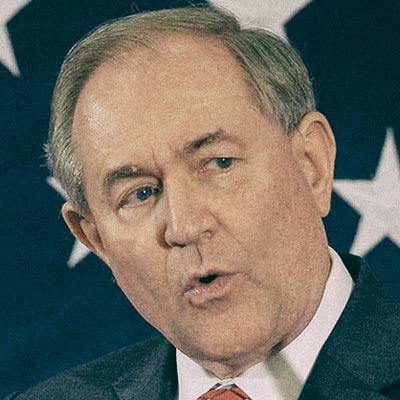


I legitimately had no idea who Jim Gilmore was until the day of the first debate, and I follow politics pretty closely. The former governor of Virginia who also apparently ran in 2008, Gilmore has possibly the lowest name ID of anyone running. Though that can change overnight (as Carly Fiorina's recent rise demonstrates), there's nothing that stands out about Gilmore to warrant his continued presence in the field.


Lindsey Graham is distinguished only by his single-minded and rabid war hawk stance, and is probably only running to try to drag foreign policy to the most invasive and militaristic place he can. Well, that and his seething hatred for fellow Senators Rand Paul and Ted Cruz, whom he has clashed with frequently over the past several years. Most Republicans, in the primary season at least, are happy enough to beat the war drum on their own without Graham's urging. 
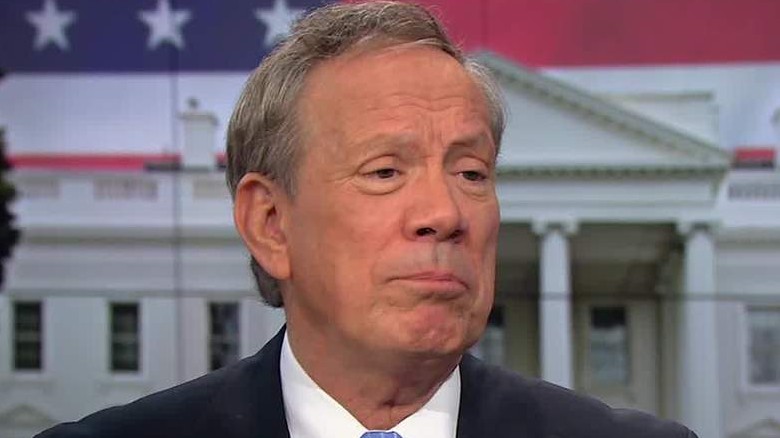


George Pataki, the former governor of New York, is essentially the same as Jim Gilmore, except he feels justified in swinging around 9/11 whenever he wants. In the same sense that Santorum is a poor man's Huckabee, Pataki is just the slightly slimmer version of Chris Christie. Like Gilmore, he brings nothing new to the table, and lacks the requisite charm and charisma to stick it out for another six months.


Rick Perry, another failed candidate from the last round famous for his live implosion on-air, is back again for some inexplicable reason. Perhaps buying into the belief that it's easier to get the nomination the second time around (just look at John McCain and Mitt Romney), he's back again, changing absolutely nothing from four years ago. He may be one of the first to go, as he's already stopped paying his staff in the early primary state of South Carolina.

To survive in this early primary season, candidates need money, strong grassroots support, or both. These five men have neither. 

Saturday, August 8, 2015

Grassroots

Conventional wisdom holds that in order to win an election, you need money. A lot of money. In 2012, it cost an average of $1.6 million to get elected to the House of Representatives, and over $10 million to take a Senate seat. The amount of fundraising that has to be done in politics is mind-blowing.

There are two main sources of funding for political campaigns. The first is the easiest: self-funding. Candidates seeking office can simply loan as much of their own money as they like to their campaign committee. The second is campaign contributions from individuals, corporations, or political action committees (PACs).

In 2014, the Republican establishment relied heavily on money to win their targeted elections. In many cases, their strategy proved successful. There were a few instances, however, where it failed. The money was still there. The support structure from the establishment and the Chamber of Commerce was still there. What was different?

Grassroots support was the key factor to victory in elections where the favored (and heavily backed) candidate lost. One such victory was Congressman Justin Amash's victory over Chamber backed primary challenger Brian Ellis, whose campaign cited "overwhelming grassroots support" as the prime mover in victory.

It's a mistake to assume that enough money can guarantee a victory, even in a Presidential election. There has been much snickering over Rand Paul's low fundraising totals (he raised $7 million in the second quarter), especially compared to some of his more well-funded opponents. Paul may not have as much money, but he does have massive grassroots support.

Polls don't mean everything, especially this far away from the actual election. Rand Paul is building the slow burn of a Presidential campaign, deliberately but surely. He has rabidly enthusiastic support among many young liberty-minded Republicans (especially online), and has packed campaign events across the country. Voter turnout matters, and Paul's partisans will definitely show up on election day. Compared to some candidates like Rick Santorum, whose Iowa campaign stop in July had just one voter, Paul is in a very good position. People want to hear what he has to say, and they like it.

PACs may have the money, but they don't vote.