Showing posts with label Presidential Primary 2016. Show all posts

Friday, September 4, 2015

Rand Still Stands

Originally published September 3, 2015 in the Hillsdale Collegian

Rand Paul, the self-described “libertarian-ish” Senator from Kentucky, is not the pres­i­dential fron­trunner — he’s even fallen in recent polls. He is not the most heavily-covered in the news. Some pundits proclaim his pres­i­dential campaign is already over, despite Time magazine’s description as “the most inter­esting man in politics” (‘The Rein­ventions of Rand Paul,’ Oct. 16, 2014).
Ulti­mately, this is just another symptom of primary politics. Rand Paul has been prominent on the national stage for years. Candidates like Carly Fiorina or John Kasich are relative newcomers to most Americans. It’s natural for the elec­torate to fixate on the shiny and the new, for a while, but that doesn’t amount to substance.
Despite recent poll data from Public Policy Polling showing Paul at 1 percent among Republican candidates, he has staying power. The rumors of his political death are being grossly exag­gerated. His strong grassroots support, unique policy positions, and his wide cross-party appeal means he will stick around to the bitter end.
Ulti­mately, Paul provides a rallying point for the growing liberty movement: polit­ically active and rabidly passionate, the small movement could well tip the election. Samuel Adams is thought to have said, “It does not take a majority to prevail, but rather an irate, tireless minority, keen on setting brushfires of freedom in the minds of men.”
His falling numbers are caused by the sheer size of the Republican field. While he has a small, dedicated liber­tarian core, other candidates are chipping away at more main­stream support — Scott Walker, Ted Cruz, even Donald Trump.
In order to survive in a pres­i­dential primary, a candidate needs either vast sums of money or strong grassroots support. While Paul has low fundraising totals, roughly seven million in the second quarter of 2015, half of that was in small contri­butions. That means that he’s attracting a core group of supporters who passionately support him. Passion is key in primaries, and Paul supporters have a lot of it.
He has focused primarily on nurturing and growing this grassroots support, much in the vein of his father Ron Paul’s 2008 and 2012 pres­i­dential bids. In addition, the Paul campaign has showed the most social media savvy, and with some of the most ardent supporters. Social media is quickly becoming one of the most important campaign tools, and a solid strategy is a great aid to a campaign.
Pres­i­dential primaries are highly unstable, espe­cially early on. Few voters have made up their minds, vacil­lating from one candidate to the next depending on media coverage, name recog­nition, and noise. Most voters have yet to settle on the boring policy proposals and budget plans. They determine their support by weighing rhetoric and stump speeches.
At this stage in the primary, polls are unre­liable, volatile, and heavily skewed. The first chance to win delegates is at the Iowa Caucuses, Feb. 1, 2016. That’s five months away. Polls five months out are a poor gauge of what the field will look like at caucus time. This time in 2011, Rick Perry was leading by double digits. Six weeks later, it was Herman Cain. A month after that, Newt Gingrich. The polls reflected their perceived electoral strength at the time, but not in reality.
Many candidates will drop out by Iowa, and their supporters will flock to the remaining candidates. Rand Paul stands to benefit from that, because he provides a legitimate and viable alter­native to the status quo.
Rand Paul is running a campaign of ideas, not one of noise and blind rhetoric. His strength is in his indi­vid­uality and uniqueness. On foreign policy, civil liberties, and genuine budget reform, he stands alone. The challenge for Paul is to convince voters to support his “libertarian-ish” alternative.

Sunday, August 16, 2015

Carly Fiorina - All Flash, No Substance

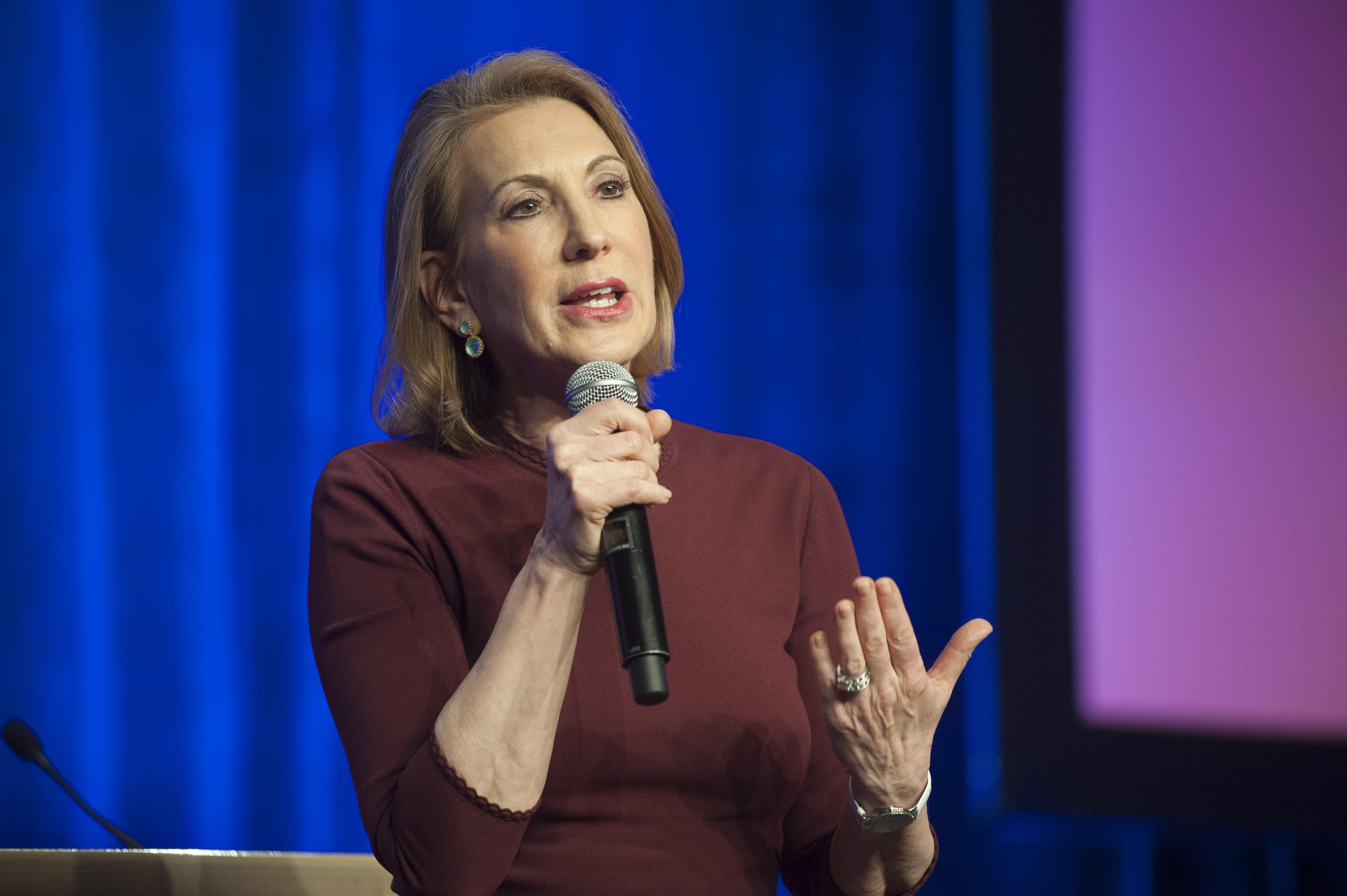
Carly Fiorina began her Presidential campaign as relatively unknown. The one-time Senate candidate and former CEO of Hewlett-Packard, she was easily lost in the crowd. Fiorina's performed with the most polish and charisma at the August 6th bush-league debate, and it almost singlehandedly shot her up in the polls. She went from a margin of error away from nonexistence to the top five.


Fiorina's rise, and her campaign thus far, has been built on the narrative she's constructed of her previous business experience. A quick glance at her campaign website reveals no substantive policy ideas, instead showing glowing statements about her background.

In many cases, Presidential campaigns are built around a figure and an image, rather than ideas. Fiorina is no exception. She frequently cites her rise from secretary to CEO, portraying herself as a self-made success. She also remains one of the best speakers in the field.

Fiorina's speaking skills, and her ability to craft a narrative around her life, explain her recent rise. At this point, most voters favor candidates based on presentation and style rather than substance. Fiorina is not reaping the benefits alone. Other candidates, like Ben Carson, employ the same strategy.


Both Fiorina and Carson are running as political outsiders, with neither holding public office prior to their campaigns. Fiorina bills this as a positive, claiming the "political class" is responsible for all the nation's woes.

Fiorina's campaign fits her message. Her campaign speeches are all carefully engineered to preserve her "political outsider" identity, and any steps towards actually discussing public policy would chip away at that. Carly Fiorina can't start talking about ideas, or her image would collapse. Right now, Fiorina is all flash, no substance. Unless her campaign evolves, her rise in the polls will be just a blip in the books.

Thursday, August 13, 2015

The Changing Fortunes of Chris Christie

Two years ago, Chris Christie topped a Rasmussen survey of likely Presidential candidates at 21%  (with Marco Rubio, Jeb Bush, and Rand Paul close behind.) Bush, Rubio, and Paul remain well positioned, but Christie's star has fallen. A recent poll shows him tied in New Hampshire -- for tenth place.

Christie was once a Republican star on the rise. After sitting out in 2012, he was widely considered a potential frontrunner in 2016. Though it's far too early to say anything for sure, Christie's slide in the polls does not bode well. Originally rising to prominence from boisterous town hall videos filmed during his successful campaign for Governor of New Jersey, Christie was billed as a hardline conservative and a party outsider. Since then, Christie has since fallen squarely in the establishment camp.


The cracks in his conservative facade began to show as early as 2011, when he endorsed Mitt Romney before the primary season began. Romney was widely perceived as too moderate for many Republicans, and his primary opponents all scrambled to get to the right of him. Christie's early and strong support for Romney confirmed which team he was truly on. Later scandals, like the imfamous Bridgegate, led many former supporters of Christie to seek greener pastures. 

In the first debate, Christie laid out the case for his candidacy based on his "proven record" as governor, a fairly safe and reasonable strategy. So safe and reasonable that Jeb Bush, John Kasich, Scott Walker, and Mike Huckabee all said the same thing. Failing to distinguish himself from the pack with his record, Christie has resorted to blind attacks to keep his name in the news, like his fierce condemnation of Rand Paul and the Fourth Amendment.

Christie used to be seen as the straight-talking "take action" Governor who wasn't afraid to speak his mind. Regardless of how accurate that perception was, he's now seen as a duplicitous, corrupt political insider, who will say whatever he thinks will get him elected. That said, Christie retains support from some big donors, and may stick around despite his sliding numbers. For now, he's merely down, and not out.

Regardless, a slip from first to tenth is far from insignificant. Christie has a lot of ground to cover, and a lot of voters to convince, if he wants to stand a chance at the nomination.

Monday, August 10, 2015

The First to Go: Five Republicans Who Won't Make it to 2016

There are currently seventeen people vying for the Republican Presidential nomination. That may not seem like much, but compared to the five Democrats, it appears chaotic. Chances are good that many will drop out before ever seeing a primary. Of course, it's too early to say anything for sure. A lot can change in the six months before the elections actually start. That said, here are five candidates whose campaigns likely won't see 2016.


Rick Santorum is the poor man's Mike Huckabee, with half the likeability, a quarter of the charisma, and a tenth of the charm. His brief rise in 2012 was a combination of shrewd delegate strategy and being the most widely palatable "Not-Romney" still standing and was not indicative of any strength in his candidacy. After a dismal performance in the JV debates, and a sputtering campaign that's losing the evangelicals to Huckabee, Santorum won't be around much longer.


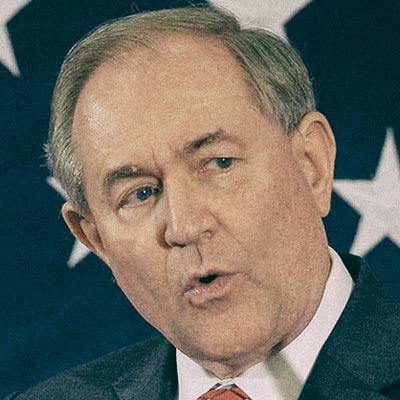
I legitimately had no idea who Jim Gilmore was until the day of the first debate, and I follow politics pretty closely. The former governor of Virginia who also apparently ran in 2008, Gilmore has possibly the lowest name ID of anyone running. Though that can change overnight (as Carly Fiorina's recent rise demonstrates), there's nothing that stands out about Gilmore to warrant his continued presence in the field.


Lindsey Graham is distinguished only by his single-minded and rabid war hawk stance, and is probably only running to try to drag foreign policy to the most invasive and militaristic place he can. Well, that and his seething hatred for fellow Senators Rand Paul and Ted Cruz, whom he has clashed with frequently over the past several years. Most Republicans, in the primary season at least, are happy enough to beat the war drum on their own without Graham's urging. 


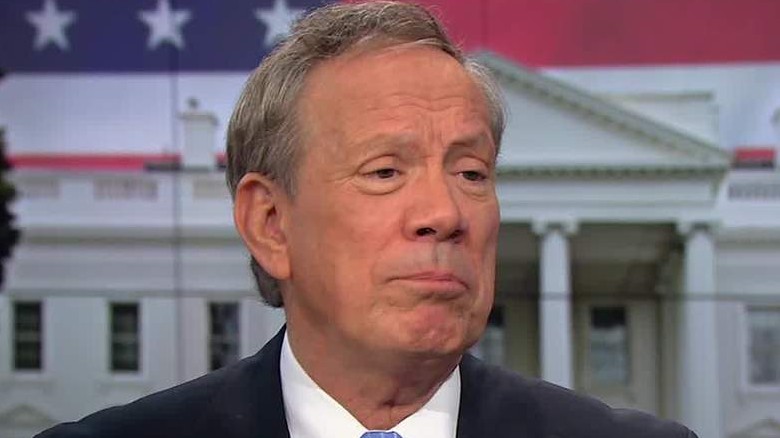
George Pataki, the former governor of New York, is essentially the same as Jim Gilmore, except he feels justified in swinging around 9/11 whenever he wants. In the same sense that Santorum is a poor man's Huckabee, Pataki is just the slightly slimmer version of Chris Christie. Like Gilmore, he brings nothing new to the table, and lacks the requisite charm and charisma to stick it out for another six months.


Rick Perry, another failed candidate from the last round famous for his live implosion on-air, is back again for some inexplicable reason. Perhaps buying into the belief that it's easier to get the nomination the second time around (just look at John McCain and Mitt Romney), he's back again, changing absolutely nothing from four years ago. He may be one of the first to go, as he's already stopped paying his staff in the early primary state of South Carolina.

To survive in this early primary season, candidates need money, strong grassroots support, or both. These five men have neither. 

Sunday, August 9, 2015

Donald Trump

Donald Trump's campaign matters. Not because he has a serious or credible candidacy, not because he's even remotely qualified to be President, and not because he has the slightest idea of what he's doing. Trump's campaign matters because of what it means for the Republican Party as a whole.

At first glance, his popular support is staggering. It becomes easier to understand once you take a look at his campaign strategy, which stands in stark contrast to the rest of the field. Simply put, Trump relies on saying as many outlandish things as he can (which he all but confirmed with his rant against political correctness at the recent debate) to get as much media buzz as possible.


That said, there's a method to his madness. A lot of his polling strength is from name recognition and his constant presence in the media, but not all of it. Donald Trump's outbursts, rants, and diatribes are all engineered perfectly to appeal to the extremes of the Republican Party.

Trump represents the crackpot Republicans. He was one of the loudest voices in the "birther" controversy several years back (which he's still sticking to), and is undoubtedly coming out strongest on immigration policy. There are some Republicans upset with the attempts by the party to pivot to a more palatable policy, and Donald Trump is the most boisterous opponent to these attempts.

Donald Trump is the worst parts of the Republican Party rolled into one person, and mulitplied tenfold. He is loud, wholly uncompromising, and unwilling to reason or change in any way. His debate performance was half incoherent ramblings, and half mindless pandering rhetoric. When asked about his past disparaging comments towards women by Megyn Kelly, he dodged the question and turned into a cheap shot at Rosie O'Donnell and was rewarded with wild laughter and applause.

Trump isn't winning right now because of his ideas. He's not winning because of what he believes, what he plans to do, or who he is. He's winning because his bombastic rhetoric is connecting with voters in a way that nobody else's is. Trump doesn't play safe. He barrels forward with no regard to the future. He's riding his wave of popularity and hoping it doesn't crest too soon.

Most voters will move on from Trump eventually. Republican Presidential Primaries have a long history of flavor-of-the-month candidates rising for a short time, confusing it for long-lasting support, and bowing out before they ever really started. This year will be no different.

Saturday, August 8, 2015

Grassroots

Conventional wisdom holds that in order to win an election, you need money. A lot of money. In 2012, it cost an average of $1.6 million to get elected to the House of Representatives, and over $10 million to take a Senate seat. The amount of fundraising that has to be done in politics is mind-blowing.

There are two main sources of funding for political campaigns. The first is the easiest: self-funding. Candidates seeking office can simply loan as much of their own money as they like to their campaign committee. The second is campaign contributions from individuals, corporations, or political action committees (PACs).

In 2014, the Republican establishment relied heavily on money to win their targeted elections. In many cases, their strategy proved successful. There were a few instances, however, where it failed. The money was still there. The support structure from the establishment and the Chamber of Commerce was still there. What was different?

Grassroots support was the key factor to victory in elections where the favored (and heavily backed) candidate lost. One such victory was Congressman Justin Amash's victory over Chamber backed primary challenger Brian Ellis, whose campaign cited "overwhelming grassroots support" as the prime mover in victory.

It's a mistake to assume that enough money can guarantee a victory, even in a Presidential election. There has been much snickering over Rand Paul's low fundraising totals (he raised $7 million in the second quarter), especially compared to some of his more well-funded opponents. Paul may not have as much money, but he does have massive grassroots support.

Polls don't mean everything, especially this far away from the actual election. Rand Paul is building the slow burn of a Presidential campaign, deliberately but surely. He has rabidly enthusiastic support among many young liberty-minded Republicans (especially online), and has packed campaign events across the country. Voter turnout matters, and Paul's partisans will definitely show up on election day. Compared to some candidates like Rick Santorum, whose Iowa campaign stop in July had just one voter, Paul is in a very good position. People want to hear what he has to say, and they like it.

PACs may have the money, but they don't vote.

Friday, August 7, 2015

The First GOP Debate: Thoughts and Analysis

The first debate was pretty much what it was expected to be. Ten men fought over the same three identities: the outsider and or rebel (Rand Paul, Ted Cruz, Donald Trump, Ben Carson), the smiling governor who vomits out statistics to "prove their record" (Chris Christie, Jeb Bush, Mike Huckabee, Scott Walker, John Kasich), and whatever Marco Rubio was trying to do.

The same ten men also fought over three policy positions: the same nebulous "true Reagan conservative" that Republicans have been ardently pursuing for the past thirty years, Rand Paul's libertarian-ish alternative (which shone especially bright on privacy, civil liberties, and foreign policy), and the absolute insanity of Donald Trump.

Considering most of the people on stage were pushing the same message, the talking times for the debate were unfairly distributed. Rand Paul, the most unique voice on stage, got the least speaking time. He arguably had the best exchange of the night with Chris Christie over metadata collection, privacy, and national security. While Christie trotted out the party line (citing 9/11 to justify ignoring the Bill of Rights fourteen years after the fact), Paul presented a fiery and passionate defense of the Fourth Amendment, which Christie called "a ridiculous answer".

Rand Paul performed admirably given the time constraints he faced. I imagine he will get a slight bump in the polls.

Ted Cruz remains the most polished rhetorician on stage, and had more charisma than half of the field put together. He continually tried to bridge the gap between his perceived "rebel" image and his actual campaign platform (a whole lotta war), and will probably get a slight bump in the polls.


My feelings on Ted Cruz in a nutshell.

John Kasich was bland, at best. I imagine the stadium was packed with whatever local supporters his campaign could trot out, explaining his few and minor cheeers (largely for talking about how cool Ohio is). He will probably fall in the polls.

Marco Rubio occupied a unique point in the debate, which worked to his advantage. Unlike fellow Senators Cruz and Paul, he's not trying to portray himself as a rebel. He's more of a moderate, bland but somewhat engaging to the point that people will at least pay attention. He also avoided the over-use of numbers and statistics (unlike the governors), which played to his advantage. He will probably get a slight bump.

I honestly forgot that Mike Huckabee was running until tonight, but the crowd seemed to like him well enough. He'll play the role of Santorum in 2012 (ultimately doomed evangelical). Based on the debate, I think he ran solely to blather on about the Fair Tax for the next five months. He'll probably slightly drop and hold fairly steady.

Scott Walker held himself decently, but didn't really differentiate himself on policy. He reminds me a lot of Tim Pawlenty in 2011, the "aw-shucks" Midwestern governor who is crushingly normal, which Walker kept insisting he was. He'll probably hold steady.

Jeb Bush was surprisingly solid. Granted, he was lying through his teeth about his record and his stance on issues such as Common Core, but his remarks were clearly well-rehearsed. He'll probably get a slight bump.

Chris Christie's campaign imploded on stage. He insisted on clinging to citing innumerable facts and figures about his record in New Jersey, to his own detriment. His heated exchange with Rand Paul made him come off as a reactionary fool, still using 9/11 as political fuel to advance whatever he thinks will "protect" America. I expect him to drop out of the top ten within a few weeks.

Ben Carson has the most roundabout way of speaking of anybody I've ever seen on a debate stage. He seems to have a tenuous (at best) grasp on most issues, and toes the party line. However, he toes the line in the most rambling way possible, so I couldn't really tell where he was going with anything he was saying. He also insists on introducing his "proportional" tax plan with a lengthy justification as it being "God's tax plan", which I still don't fully understand. Somehow, the crowd liked him. He'll probably hold steady.

Donald Trump, the current frontrunner, was like a drunken conductor driving a train off of a bridge. I couldn't look away. This is the first time I've ever really seen him talk for an extended period of time, and he was either insane or moderately drunk while on stage. He starts off by already threatening a third-party run (and is called out immediately by Paul), and then cites word of mouth from a border agent as proof for his outrageous claim that the Mexican government is deliberately sending criminals to America.

Everything Trump said was incomprehensible, at best, and crazy at worst. The crowd was fairly divided between constantly appluading and constantly booing him every time he spoke. I'd be shocked if he didn't fall in the next round of polling.

And we have to sit through ten more of these things.

Sunday, August 2, 2015

The Limits of Polling

In the latest Quinnipiac poll, Donald Trump leads by 20 points. Four years ago, Rick Perry surged ahead in the polls, and stayed there for months, until he managed to forget his own platform on the debate stage. By October, Herman Cain began his surge in the polls, followed soon after by Newt Gingrich.

Perry, Cain, and Ginrich all failed to secure the nomination, even though early polling data suggested otherwise. They did not fail due to some outrageous gaffe or scandal, but rather due to flaws in their campaign strategies, platforms, and personalities that were already there to begin with.

Sudden shifts in polling data mean little to nothing early on. Right now, the earliest chance to earn delegates is the Iowa Caucuses, which would take place at the very earliest in January 2016. Five months is a long time in a presidential primary.

The reason Trump is surging in the polls is simple. He appeals strongly to low information voters, those who like someone who "tells it like it is" or has a bombastic rhetoric that grabs attention. Get a few talking heads to drop his name and show a few clips, and you can shore up support in a matter of weeks.

A fast rising flame is the first to fall. The campaign strategy of quick and dirty surges is significantly less effective than trying to build a genuine support base, a stable fundraising infrastructure, and a cohesive long-term strategy at a national level.

Donald Trump is a man of little substance, prone to outrageous and insane statements, and will likely drop out before ever reaching a primary.

Within a few months, there will be a second Donald Trump: someone who dramatically rises in the polls due to a slight shift in public opinion. It will continue happening up until the primaries actually start, and it will be just as meaningless.